
Best Beaches in Puerto Viejo: Cocles, Punta Uva & Manzanillo (2026)
Beach-by-beach guide to Puerto Viejo’s Caribbean coast. Playa Cocles, Chiquita, Punta Uva, and Manzanillo compared with swim safety, surf, and snorkeling tips.
Quick answer: The best beaches near Puerto Viejo, running south from town, are: Playa Cocles (surfing, social scene), Playa Chiquita (hidden coral pools, quiet coves), Punta Uva (calm turquoise water, the most photogenic beach in Costa Rica), and Playa Manzanillo (wild, remote, reef snorkeling). Playa Negra in town is the closest but not the best for swimming. All four main beaches are connected by a flat coastal road and reachable by bike in 5 to 30 minutes.
The Puerto Viejo coastline is unlike anything you will find on the Pacific side of Costa Rica. Instead of crashing surf and grey sand, the Caribbean delivers white sand, turquoise water, coral reef, and jungle that grows right up to the shoreline. The beaches here are smaller, quieter, and strung together like beads on a necklace along a single coastal road that ends at the tiny village of Manzanillo.
We have been bringing clients to these beaches since we started Toorizta. Dallas lived on this coast for nearly a year in his early twenties and still considers Playa Chiquita his favorite beach in the country. This guide covers every beach worth visiting, what each one is best for, swimming conditions, how to get there, and the insider details that help you pick the right one for your trip.
For the full overview of the region including activities, transport, hotels, and itinerary planning, read our Complete Puerto Viejo Travel Guide.
Puerto Viejo Beach Map: Which Beach Is Where?
Quick answer: All beaches sit along a single 13 km coastal road running south from Puerto Viejo town to Manzanillo. In order from town: Playa Negra (0 km), Playa Cocles (2 km), Playa Chiquita (5 km), Punta Uva (8 km), Manzanillo (13 km). You can bike the entire stretch in about 40 minutes without stopping, or take a full day hopping between them.
Beach
Distance from Town
Swim Safety
Crowd Level
Best For
Playa Negra
In town
Moderate (waves, some rocks)
Moderate
Convenience, sunset walks
Playa Cocles
2 km (~5 min bike)
Strong currents, reef break
Moderate to busy
Surfing, socializing, beach bars
Playa Chiquita
5 km (~12 min bike)
Calm in pools, variable elsewhere
Low
Coral pools, solitude, snorkeling
Punta Uva
8 km (~20 min bike)
Very calm, shallow, protected
Low to moderate
Families, swimming, photos
Manzanillo
13 km (~30 min bike)
Calm near shore, reef offshore
Low
Snorkeling, nature, end-of-road vibes
Marta’s favorite: Renting a bike and beach hopping the entire stretch from town to Manzanillo is the thing Marta looks forward to most on the Caribbean side. No schedule, no plan, just pedaling south and stopping wherever the water looks good. Bikes rent for $8 to $12 per day in town.
Playa Cocles
Quick answer: Playa Cocles is the most popular beach near Puerto Viejo. It is a long stretch of golden-white sand backed by palm trees, with consistent surf breaks that work year-round. The main break is a reef point that produces left and right waves suitable for intermediates. Beginners should take a lesson rather than paddling out alone. The beach has the most developed scene on this coast, with a few restaurants and accommodations within walking distance.
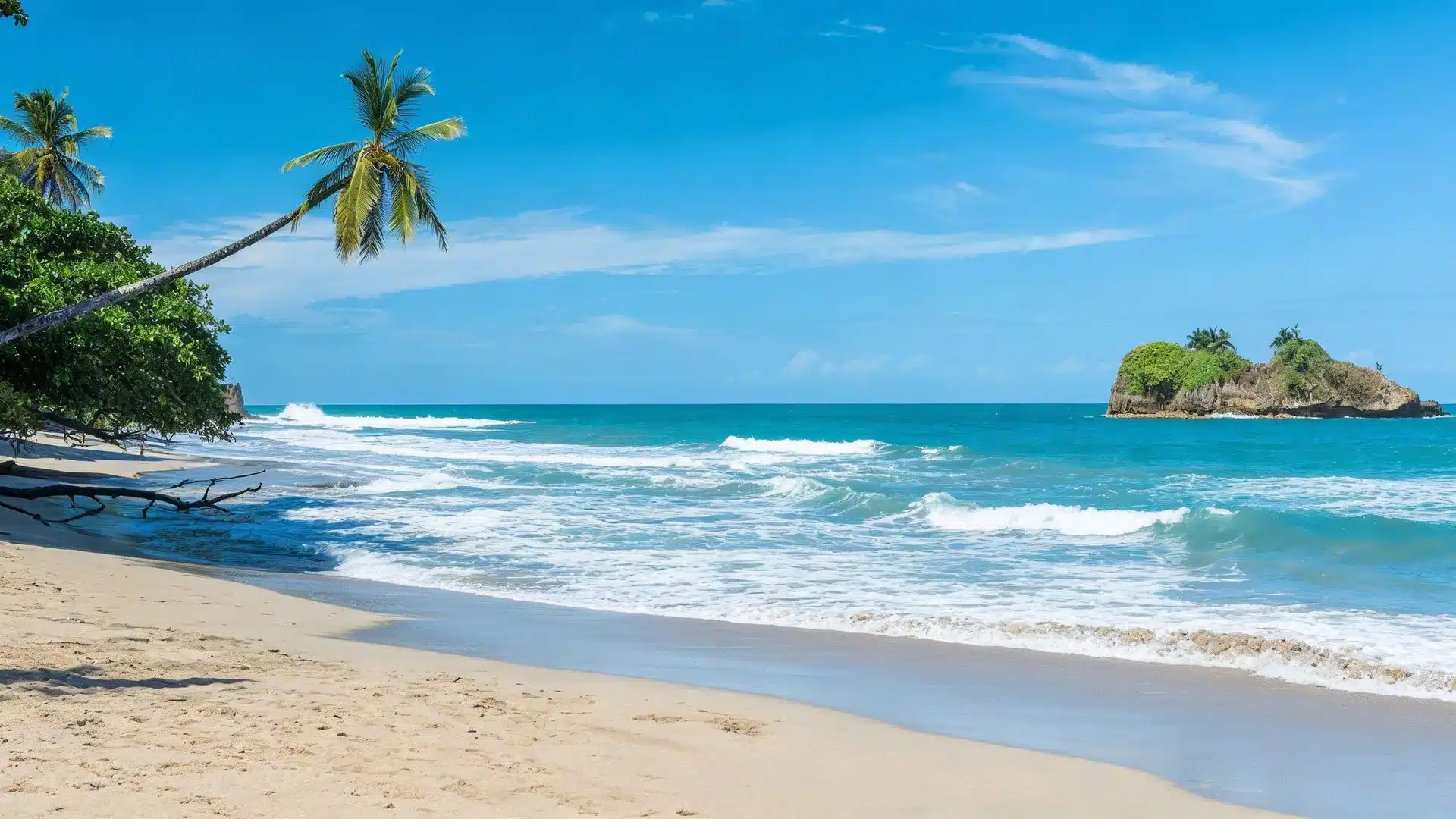
Cocles is the beach where most of the energy concentrates. It is the closest “real” beach to town (Playa Negra in town is fine for a walk but not ideal for a beach day), and it draws surfers, backpackers, yoga travelers, and digital nomads in roughly equal measure. On weekends and holidays, it is the busiest beach on the Caribbean coast, though “busy” here still means you can find space without difficulty.
The surf is the main draw. The reef break at Cocles produces consistent waves from December through March (the best swell window) and again from June through August. The inside section works for intermediates, while the outside reef delivers more power for experienced surfers. Rip currents are common, particularly during larger swells. If you are not a confident swimmer, stay in the shallower sections near the south end of the beach.
For surf lessons, we work with local instructors who know these breaks intimately. Private lessons run $80 per person for 2 hours. Group lessons are $60 per person. Equipment is included in both.
Best for: Surfers, social travelers, anyone who wants beach energy with nearby food and drink options.
Not ideal for: Families with small children who want calm swimming water (head to Punta Uva instead).
Getting there: 5 minutes by bike from Puerto Viejo town center, flat road. Taxi from town is roughly $3 to $5.
Playa Chiquita
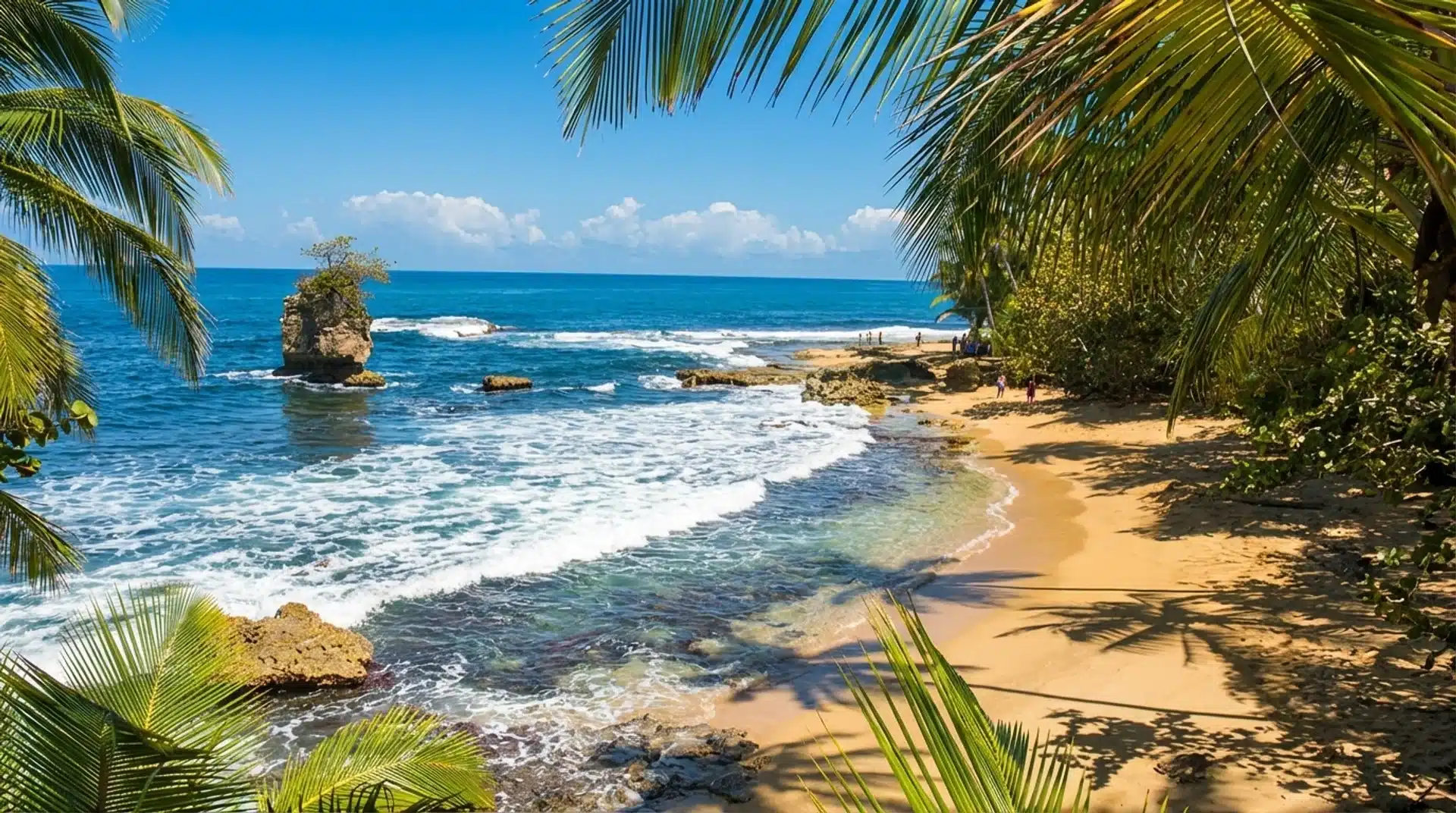
Quick answer: Playa Chiquita is not one single beach but a series of small coves and rocky points stretching roughly 2 km along the coast between Cocles and Punta Uva. The highlight is a natural coral pool hidden behind a narrow walkway off the main road. The water in the pool is calm and clear, the reef is right there for snorkeling, and most visitors drive right past without knowing it exists.
Playa Chiquita
Playa Chiquita is the locals’ beach. There is no sign from the road, no parking lot, and no beach bar. You access the various coves through narrow paths cut between properties, most of them unmarked. This is exactly why it stays quiet even when Cocles and Punta Uva have visitors.
The swimming conditions vary by cove. Some sections have rocky entries and stronger currents. Others, especially the coral pool, are protected and calm. The key is knowing which access point to use. Most first-time visitors who wander down a random path end up at a mediocre section and assume they have seen the whole beach. They have not.
Dallas’s pick: This is my favorite beach in all of Costa Rica. When I lived here in my twenties, I came to the coral pool almost every day. The entrance is a narrow walkway that most people miss entirely. The pool is formed by a natural coral formation that blocks the waves, creating a calm, clear basin where you can snorkel right off the rocks. Even on the busiest weekends, I have had this spot nearly to myself. Here is the exact Google Maps pin so you find the right entrance.
Best for: Couples, solo travelers, anyone who values solitude and discovery over convenience. Excellent for snorkeling when conditions are calm.
Not ideal for: Travelers who want easy beach access, clear signage, or nearby services. You need to bring your own water and snacks.
Getting there: 12 minutes by bike from Puerto Viejo. Several unmarked access paths branch off the main road between km 4 and km 6. Use the Google Maps pin above for the coral pool.
Punta Uva
Quick answer: Punta Uva is the most beautiful beach on Costa Rica’s Caribbean coast and one of the most photogenic in the entire country. A crescent of white sand curves around a bay of calm, turquoise water, backed by dense tropical forest. The water is shallow and protected by a reef, making it safe for children and non-swimmers. There are a couple of small restaurants near the main access point.
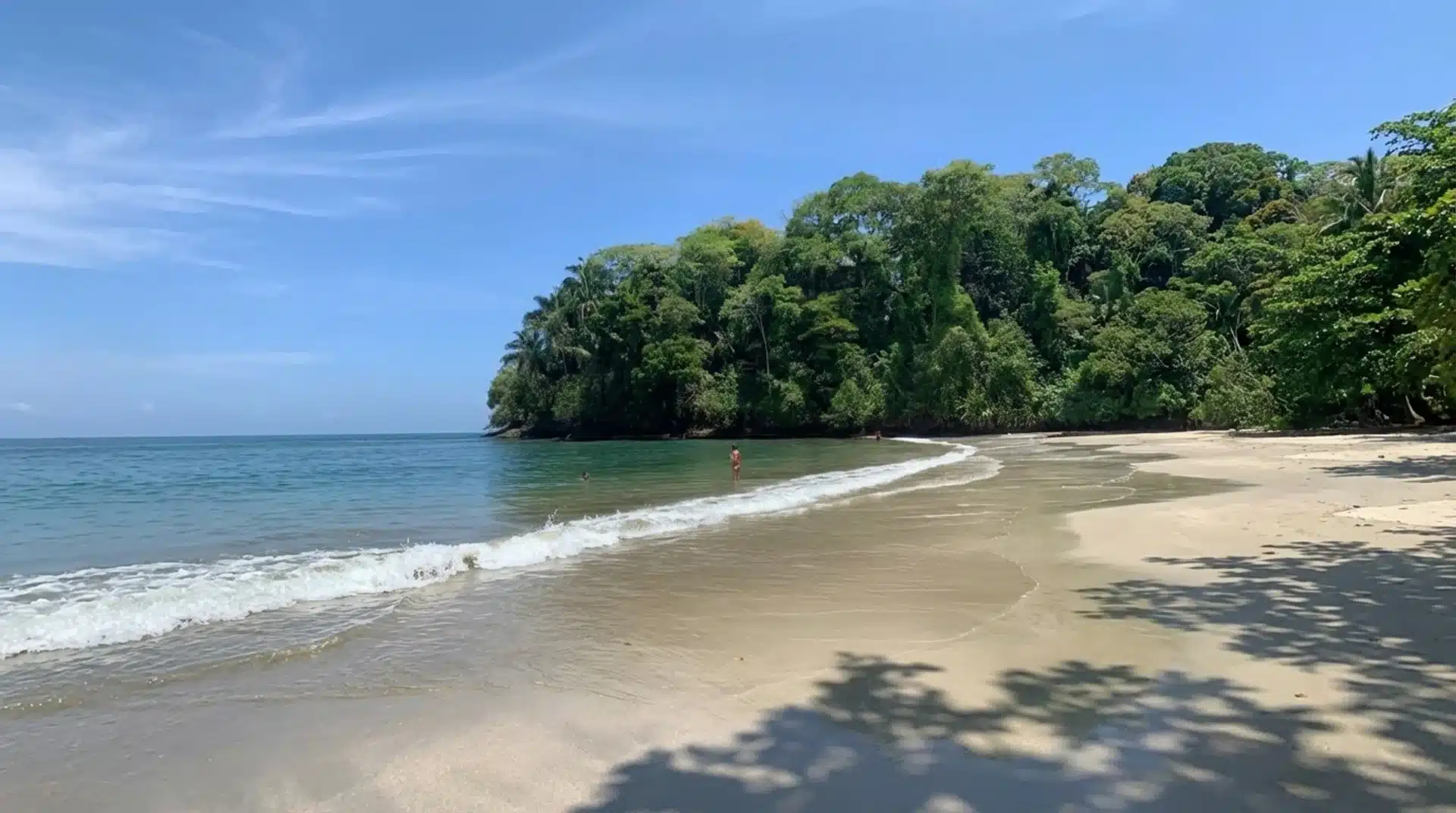
If you visit one beach during your time in Puerto Viejo, make it Punta Uva. The turquoise here is not exaggerated in photos. On a clear day, the water looks like it belongs in Southeast Asia, not Central America. The reef offshore breaks up the wave energy, so the swimming area stays calm and shallow for 30 to 50 meters out from shore.
The main access point has a small parking area and a couple of restaurants that serve fresh fish, ceviche, and cold drinks. A trail from the main beach continues around the point to a quieter section on the south side, which sees fewer visitors and has good snorkeling along the rocky edge.
Punta Uva is also the starting point for several water-based activities we book for clients. The Sloth Jungle and River Kayaking Tour ($65 per person) launches from the river mouth near Punta Uva and combines mangrove kayaking with sloth spotting. The SUP in Punta Uva River tour ($75 per person) covers the same waterway on stand-up paddleboards.
Best for: Families with children, couples, photographers, anyone who wants calm water and stunning scenery. Our number one beach recommendation for clients.
Not ideal for: Surfers (no waves). Travelers who want nightlife nearby (the nearest bar scene is back in Cocles or town).
Getting there: 20 minutes by bike from Puerto Viejo. The main access is a signed turnoff from the coastal road at roughly km 8. Taxi from town runs about $8 to $10.
Playa Manzanillo
Quick answer: Manzanillo is the end of the road, 13 km south of Puerto Viejo. The beach sits at the edge of the Gandoca-Manzanillo National Wildlife Refuge. The water is calm near shore, and the offshore coral reef is the best snorkeling on the Caribbean coast with over 35 coral species and roughly 140 fish species. The village has a handful of restaurants, a football pitch, and a wild, unhurried atmosphere.
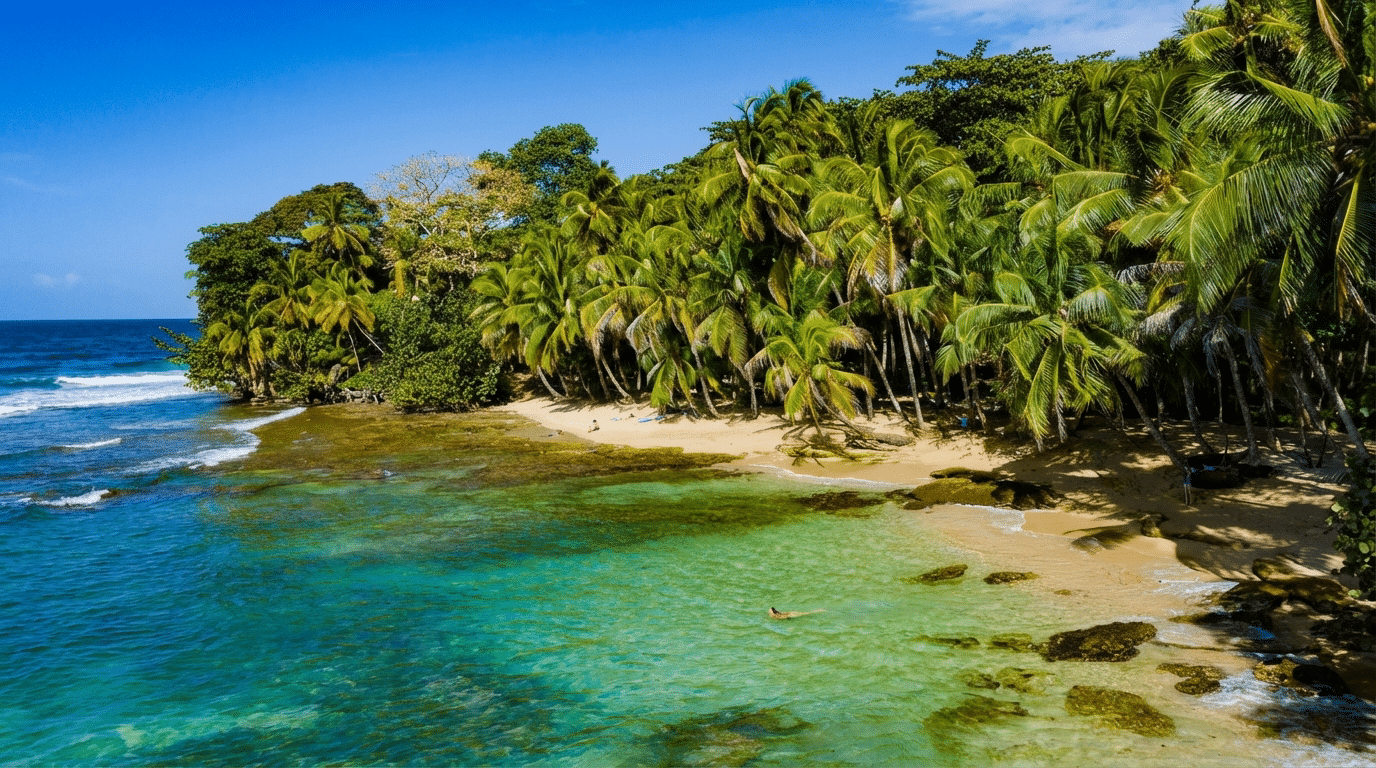
Manzanillo feels like the end of the world in the best way. The paved road stops here. Beyond the village, the Gandoca-Manzanillo Wildlife Refuge stretches all the way to the Panama border with nothing but jungle, mangroves, wetlands, and empty coastline. The village itself has maybe a dozen structures, a couple of open-air restaurants serving fresh fish and rice and beans, and a football field where locals play in the evenings.
The snorkeling is the main draw. The coral reef system off Manzanillo is Costa Rica’s most significant on the Caribbean side, supporting nurse sharks, sea turtles, spotted eagle rays, and schools of tropical fish. Visibility depends heavily on recent rain and wave conditions. The best months for snorkeling are September through October and March through April, when rainfall is lower and the water clears up. Boat-based snorkel tours get you to the outer reef sections that are not accessible from shore.
For a deeper experience of this area, the Deep Experience Wildlife Refuge of Manzanillo ($75 per person) is a guided trek through the refuge covering the best trails and wildlife spotting zones. The Punta Mona Jungle Expedition ($90 per person) goes even further, taking you to an off-grid eco farm at the edge of the refuge.
Best for: Snorkelers, nature lovers, travelers who want to feel like they have reached somewhere truly remote. Great lunch destination on a bike ride from town.
Not ideal for: Travelers who want facilities, shade structures, or easy access. Bring your own water, sunscreen, and snorkel gear (or rent in town before riding down).
Getting there: 30 minutes by bike from Puerto Viejo. The road is flat the entire way. Taxi from town costs roughly $10 to $15. No public bus runs this route regularly.
Playa Negra (Puerto Viejo Town Beach)
Quick answer: Playa Negra is the black and dark-sand beach directly in Puerto Viejo town. It is not the prettiest beach on this coast, but it is the most convenient. Good for morning walks, watching the local surf break (Salsa Brava), and grabbing food at the restaurants that line the beachfront. Swimming is not recommended near the Salsa Brava break due to shallow reef and strong currents.
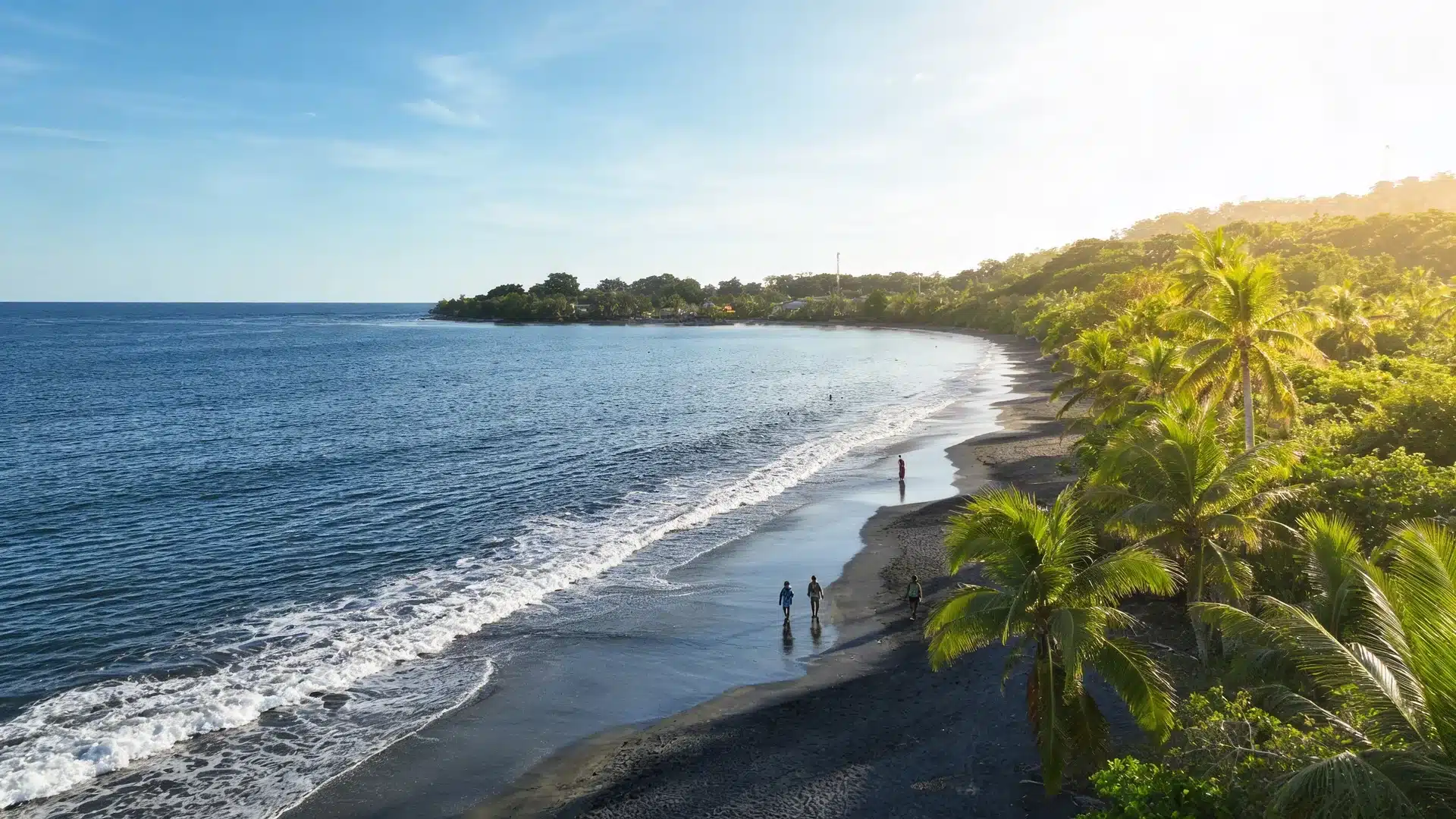
Playa Negra is where most visitors first encounter the Caribbean coast because it is right in town. The sand is a mix of dark volcanic and coral fragments. The Salsa Brava break is visible from the beach, and when the swell is up (December through March primarily), watching experienced surfers navigate this powerful reef break is entertainment in itself.
For swimming, walk to the southern end of the beach near the old dock where the water is calmer and the bottom is sandier. The northern section near Salsa Brava has shallow reef, sharp coral, and currents that catch inexperienced swimmers off guard. This is not a beginner swim spot.
Best for: Convenience, sunrise and sunset walks, watching Salsa Brava surf, grabbing a meal between the beach and the restaurants in town.
Not ideal for: A dedicated beach day. If you have time, bike south to Punta Uva or Cocles instead.
Swimming Safety and Conditions
The Caribbean coast has different swimming conditions than the Pacific side of Costa Rica. Here is what to know before you get in the water.
Reef and rocks. Most beaches on this coast have reef or rocky sections close to shore. Water shoes are strongly recommended, especially at Playa Chiquita and Manzanillo. The reef is sharp and cuts happen easily, particularly at low tide.
Currents. Rip currents are present at Playa Cocles and parts of Playa Negra, especially during larger swells. If caught in a current, swim parallel to shore, not against it. Punta Uva and the protected coves at Playa Chiquita are the safest options for weaker swimmers.
No lifeguards. None of these beaches have lifeguards. Swim within your ability and never swim alone at the more exposed beaches.
Reef-safe sunscreen. This coast sits alongside Costa Rica’s most important coral reef system. Conventional sunscreens containing oxybenzone and octinoxate damage coral. Use reef-safe, mineral-based sunscreen. You can find it in shops in Puerto Viejo town, but it is easier and cheaper to bring your own.
Jellyfish and sea urchins. Both are present, though encounters are infrequent. Sea urchins are more common in rocky areas at low tide. Shuffle your feet when entering the water over rocky bottom to avoid stepping on them.
Best Time to Visit Puerto Viejo Beaches
The Caribbean coast weather pattern is different from the Pacific side. The driest months are September through October and February through April. These windows offer the best beach conditions: clearer water, calmer seas, better snorkeling visibility.
May through August and November through January bring more rain and sometimes rough seas. That said, mornings are usually clear even during wetter months, and a rainy afternoon does not ruin a beach day if you time it right.
For snorkeling specifically, September through October is the sweet spot. The water is clearest, the seas are calm, and the reef comes alive with activity.
For surfing at Cocles, December through March brings the biggest and most consistent swells. June and July produce a secondary swell season with smaller but rideable waves.
How to Get Around Between Beaches
Bicycle (recommended). The coastal road from Puerto Viejo to Manzanillo is flat and mostly paved. Bikes rent for $8 to $12 per day in town. This is the most popular and practical way to beach hop. Bring a bike lock because theft does happen.
Taxi. Available in Puerto Viejo town. Expect to pay roughly $3 to $5 to Cocles, $8 to $10 to Punta Uva, and $10 to $15 to Manzanillo. Negotiate the price before getting in. Returning taxis from Manzanillo can be harder to find, so either arrange a pickup time or plan to bike.
Rental car. Useful if you are staying in the Punta Uva or Manzanillo area and want to reach Cahuita (30 minutes north of town) without backtracking. The road is narrow with no streetlights, so drive carefully at night. Parking is informal (roadside) at most beaches.
Walking. Possible between Cocles and Playa Chiquita along the beach at low tide. Not practical for longer distances due to the tropical heat.
Frequently Asked Questions
Which Puerto Viejo beach is best for families?
Punta Uva. The water is calm, shallow, and protected by the offshore reef. Young children can wade and splash safely. There are a couple of restaurants near the main access point for lunch, and the sand is clean white. It is the beach we recommend most for families with kids under 10.
Which beach is best for surfing?
Playa Cocles for beginners and intermediates. Salsa Brava (in town) for experts only. Cocles has a reef break that produces consistent waves in a wider range of conditions, with an inside section that works well for learning. Private surf lessons through Toorizta start at $80 per person.
Which beach has the best snorkeling?
Manzanillo for reef diversity and boat-based snorkel tours. Playa Chiquita’s coral pool for easy, shore-accessible snorkeling in calm conditions. Cahuita National Park (30 minutes north) also offers excellent reef snorkeling with a guided tour ($55 per person).
Is it safe to swim at Puerto Viejo beaches?
Yes, with awareness. Punta Uva is the safest for swimming. Playa Chiquita’s coral pool is calm and protected. Playa Cocles has stronger currents and is best for confident swimmers. None of the beaches have lifeguards. Wear water shoes over rocky areas and use reef-safe sunscreen to protect the coral.
Can I visit all the beaches in one day?
Yes, by bicycle. Leave Puerto Viejo in the morning, stop at Cocles, continue to Playa Chiquita, then Punta Uva for a swim and lunch, and finish at Manzanillo. The total ride is 13 km each way on flat road. Budget a full day if you want to actually spend time at each beach rather than just passing through.
Browse All Puerto Viejo Experiences
Want Us to Plan Your Caribbean Beach Days?
Tell us your dates and who is traveling. We will put together a custom itinerary that sequences the right beaches, activities, and transport so you get the most out of your time on the Caribbean coast.
Talk to Dallas & Marta on WhatsApp
Dallas & Marta
Pura Vida
Toorizta is how modern travelers plan, book and share Costa Rica trips. Open the app to build your own.
Open the Toorizta app