
Puerto Viejo Travel Guide: Costa Rica’s Caribbean Side (2026)
Plan your Puerto Viejo trip with our 2026 guide. Best beaches, Cahuita, transport, where to stay, and insider tips from local Costa Rica travel planners.
Quick answer: Puerto Viejo de Talamanca sits on Costa Rica’s southern Caribbean coast, roughly 4.5 hours southeast of San Jose. It is the most culturally distinct beach town in the country, blending Afro-Caribbean heritage, reggae rhythms, reef surfing, and rainforest wildlife with a laid-back pace that feels nothing like the Pacific side. Most travelers spend 3 to 5 days here. The Caribbean coast contains Costa Rica’s only living coral reef system and some of its most beautiful white-sand beaches.
Puerto Viejo is the side of Costa Rica most first-time visitors skip, and the one most repeat visitors say they wish they had found sooner. I (Dallas) know this firsthand because the same thing happened to me. In my early twenties, I was passing through on my way to South America. Puerto Viejo was supposed to be a short stop. I ended up staying for nearly a year, working and living on the Caribbean coast, completely derailed from the original plan in the best possible way. The place just got under my skin: the reggae, the reef, the food, the people, the pace of it all. When I finally continued south, I already knew I would be back.
That personal connection is why we started sending clients here early on. Puerto Viejo offers something none of our Pacific destinations can: a completely different culture, a different coastline, a different rhythm. The food is different. The music is different. The beaches are different. And the crowds are a fraction of what you will find in Manuel Antonio or Tamarindo.
This guide covers everything we share with our clients before they head to the Caribbean: how to get there, what to do, which beaches to hit, where to stay, how many days you need, and the timing and weather details that trip up most travelers who only researched the Pacific side.
What Is Puerto Viejo de Talamanca?
Quick answer: Puerto Viejo de Talamanca is a small Caribbean beach town in Limon Province, roughly 16 km north of the Panama border. It is the cultural capital of Costa Rica’s Afro-Caribbean community, with roots tracing back to Jamaican and Trinidadian immigrants who arrived in the late 1800s to work on banana plantations and the Atlantic railroad. The town sits within the Talamanca-Caribbean Biological Corridor, one of the most biodiverse regions on the planet.
Important distinction: there are two “Puerto Viejos” in Costa Rica. Puerto Viejo de Talamanca is the Caribbean beach town covered in this guide. Puerto Viejo de Sarapiqui is a completely different place in the northern lowlands, popular for river rafting. Make sure you (and your GPS) are headed to the right one.
The town itself is compact. You can walk the main street end to end in about 15 minutes. Bikes are the preferred mode of transport. The vibe is more Caribbean island than Central American mainland. You will hear more reggae and calypso than you will hear salsa. You will eat rice and beans cooked in coconut milk (the Caribbean version) rather than the black beans and white rice served on the Pacific side. And the pace is slower here, intentionally so.
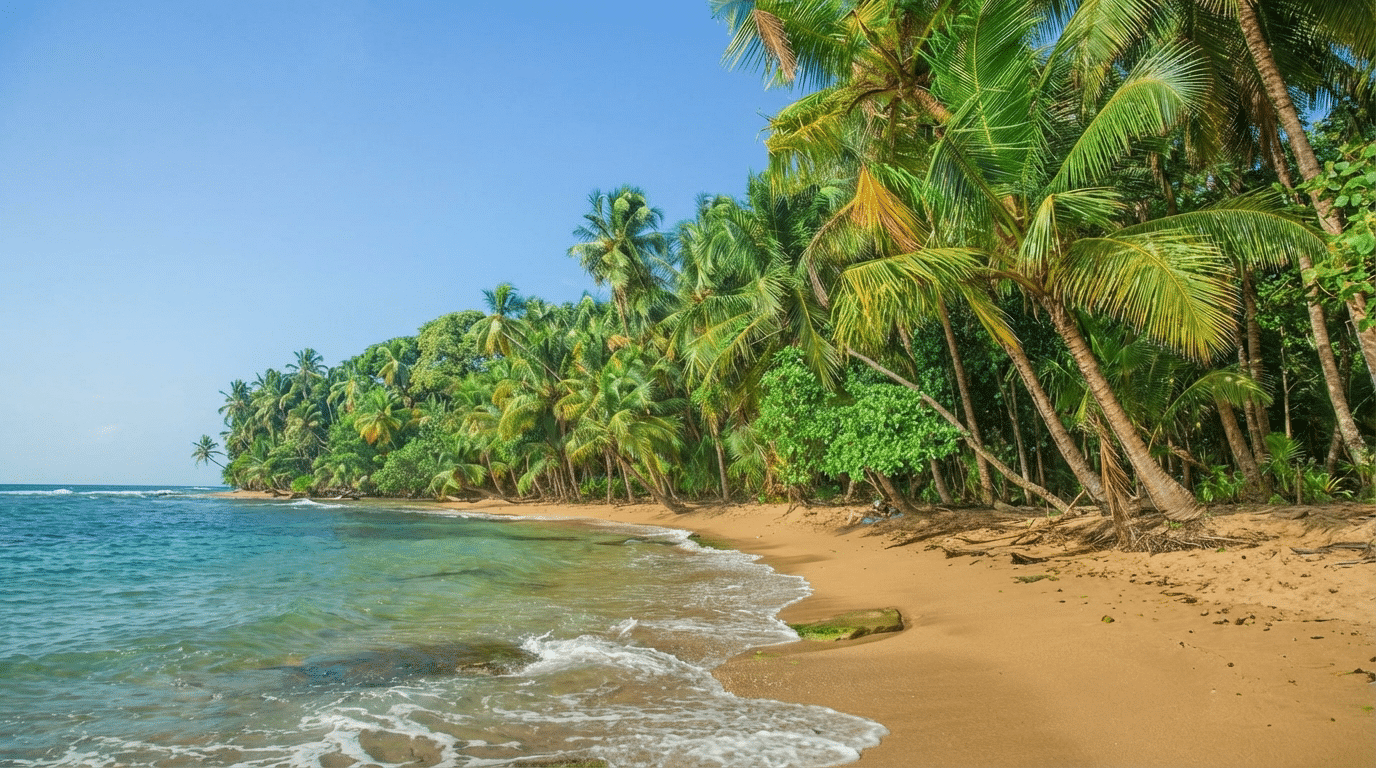
South of town, a single paved road runs along the coast through a string of beaches: Playa Cocles, Playa Chiquita, Punta Uva, and Manzanillo. Each has its own character. The entire stretch sits within or adjacent to the Gandoca-Manzanillo National Wildlife Refuge, which protects roughly 9,400 hectares of marine and terrestrial habitat including Costa Rica’s largest coral reef.
How Do You Get to Puerto Viejo from San Jose?
Quick answer: The four main options are private shuttle (4.5 to 5 hours, $360 round-trip for up to 4 passengers), shared shuttle via Caribe Shuttle or similar ($55 per person, fixed schedule), public bus from the Gran Terminal del Caribe in San Jose ($12 to $15, 4.5 to 5 hours), or rental car (4.5 hours via Route 32 through Braulio Carrillo National Park). There are no domestic flights to the southern Caribbean.
Option
Time
Price
Best For
Private Shuttle
4.5 to 5 hrs
$360 round-trip (up to 4 pax)
Families, couples, groups
Shared Shuttle
5 to 5.5 hrs
~$55 per person
Solo travelers, budget-conscious
Public Bus
4.5 to 5 hrs
$12 to $15
Budget travelers, backpackers
Rental Car
4.5 hrs
$40 to $80/day + fuel
Multi-stop road trips
The drive from San Jose goes through Braulio Carrillo National Park, a dramatic stretch of mountain highway that drops from the Central Valley into the Caribbean lowlands. The road is well-paved but winding, with occasional fog and rain. Once you reach Limon, it is another 60 km south along the coast to Puerto Viejo.
Unlike the Pacific side, there are no domestic flights serving the southern Caribbean. The nearest airstrip is in Limon, but flights are infrequent and still leave you an hour from Puerto Viejo by car. For most travelers, the drive or shuttle is the only realistic option.
For the full breakdown of every transport option with timing, pricing, and tips for the drive, read our dedicated guide: How to Get to Puerto Viejo from San Jose.
Book Your Private Shuttle to Puerto Viejo ($360)
What Are the Best Beaches in Puerto Viejo?
Quick answer: The top beaches running south from Puerto Viejo are: Playa Cocles (surfing, social energy), Playa Chiquita (calm coves, snorkeling), Punta Uva (the most photogenic beach in Costa Rica, calm turquoise water), and Manzanillo (wild, remote, reef snorkeling). Playa Negra, the black-sand beach in town, is the closest but not the prettiest. Each beach is 5 to 15 minutes by bike from the last.
Beach
Distance from Town
Vibe
Best For
Playa Cocles
2 km (~5 min bike)
Social, active, surf breaks
Surfers, young travelers
Playa Chiquita
5 km (~12 min bike)
Quiet coves, natural coral pool
Families, couples, Dallas’s favorite
Punta Uva
8 km (~20 min bike)
Pristine, turquoise, postcard-perfect
Everyone (our top pick)
Manzanillo
13 km (~30 min bike)
Wild, remote, reef access
Snorkelers, nature lovers
Punta Uva is the beach we recommend most. The water is calm, the sand is white, the jungle backdrop is dense, and on a clear day the turquoise is almost unreal. It is one of the few beaches in Costa Rica where you can swim in warm, protected water with virtually no waves. Families with young children love it.
Playa Cocles draws surfers. The reef break here produces consistent waves that work best from December through March and again in June and July. The Salsa Brava break, right off the point in Puerto Viejo town, is one of the most powerful waves in Central America, but it is expert-only and breaks over shallow reef. For beginners, Cocles is the move.
Manzanillo is the end of the road, literally. Past this point, the Gandoca-Manzanillo Wildlife Refuge takes over. The coral reef offshore is the best snorkeling on this coast. The village itself has a handful of restaurants, a football field, and very little else. That is the appeal.
Dallas’s pick: My personal favorite is Playa Chiquita. When I lived here in my twenties, this was my go-to spot almost every day. There is a natural coral pool tucked behind a narrow walkway that most visitors walk right past without noticing. The entrance is hidden from the main road, so even on busy days you can have the pool almost to yourself. The water is calm, the reef is right there, and the whole setting feels like something you stumbled onto by accident. Here is the exact location on Google Maps so you do not miss it.
For our full beach-by-beach breakdown with swimming conditions, best times, and what to bring, read our dedicated guide: Best Beaches in Puerto Viejo: Cocles, Punta Uva, and Manzanillo.
What Are the Best Things to Do in Puerto Viejo?
Quick answer: The top activities in Puerto Viejo are: surfing at Cocles or Salsa Brava, snorkeling at Manzanillo and Cahuita, visiting Cahuita National Park, taking a chocolate or cacao farm tour, cycling the coastal road from town to Manzanillo, exploring the Gandoca-Manzanillo Wildlife Refuge, booking a Caribbean cooking class, kayaking through mangroves, wildlife spotting for sloths and toucans, and soaking in Afro-Caribbean food and nightlife in town.
1. Cahuita National Park
Cahuita sits 30 minutes north of Puerto Viejo and protects 600 hectares of lowland rainforest plus Costa Rica’s largest coral reef (roughly 600 hectares of marine area). The park’s main trail runs 8 km along the coast through primary forest, and wildlife sightings are almost guaranteed: white-faced capuchin monkeys, howler monkeys, sloths, raccoons, and countless bird species. The Kelly Creek entrance operates on a voluntary donation model. The Puerto Vargas entrance charges $5 for nationals and has a set entrance fee for foreigners. The beach inside the park is one of the best on the Caribbean coast. Book a guided nature walk through Cahuita with Toorizta ($55 per person). For our complete guide, watch for: Cahuita National Park: Complete Visitor Guide.
2. Surfing
Puerto Viejo has the most famous wave in the Caribbean: Salsa Brava, a powerful reef break that draws experienced surfers when the swells line up between December and March. For beginners and intermediates, Playa Cocles offers friendlier conditions with a sandy bottom. Private surf lessons start at $80 per person for a 2-hour session with a local instructor, board and equipment included. Group lessons run $60 per person if you are traveling with friends.
3. Snorkeling and Reef Exploration
The Caribbean coast has something the Pacific side does not: coral reef. The reef system off Cahuita and Manzanillo supports over 35 species of coral and roughly 140 species of fish, plus sea turtles, nurse sharks, and rays. The best snorkeling conditions are from September through October and again from March through April, when the water is clearest. Boat-based snorkel tours from Manzanillo get you to the outer reef sections where visibility reaches 15 to 20 meters on good days.
4. Chocolate and Cacao Farm Tours
Cacao has been cultivated on the Caribbean coast for centuries, long before it was a cash crop. Several family-run farms near Puerto Viejo offer tree-to-bar chocolate tours where you harvest cacao pods, ferment and roast the beans, and make your own chocolate. These are not factory tours. You are walking through active rainforest farms with guides who grew up on the land. Tours typically last 2 hours and include tastings. Book the Chocolate Tour through Toorizta ($40 per person).
5. Cycling the Coastal Road
The 13 km road from Puerto Viejo to Manzanillo is flat, mostly paved, and runs through dense jungle canopy with the ocean appearing and disappearing on your left. You can rent bikes in town for roughly $8 to $12 per day. Stop at each beach along the way, grab lunch in Punta Uva or Manzanillo, and ride back in the afternoon. This is one of the most enjoyable half-day activities on the Caribbean coast and it costs almost nothing.
Marta’s favorite: Renting a bike and beach hopping along this road is the thing Marta looks forward to most every time we visit the Caribbean side. No schedule, no tour, just pedaling from one beach to the next, stopping wherever looks good. She will tell you it is the most Puerto Viejo thing you can do.
6. Gandoca-Manzanillo Wildlife Refuge
This 9,400-hectare protected area stretches from Manzanillo to the Panama border. It covers wetlands, mangroves, coral reef, and lowland rainforest. Hiking trails lead through the refuge to remote beaches and lagoons. Book the Deep Experience Wildlife Refuge of Manzanillo ($75 per person) for a guided trek that covers the best sections. During sea turtle nesting season (March through July for leatherbacks, July through October for green and hawksbill turtles), the refuge runs volunteer and guided programs where you can observe nesting activity at night.
7. Caribbean Cooking Classes
Learn to make rice and beans with coconut milk, Caribbean-style chicken, patacones, and fresh ceviche from local cooks who have been preparing these dishes for generations. Most classes run 2 to 3 hours and include a market visit to source ingredients. This is one of the most unique cultural experiences on the Caribbean coast because the cuisine here draws from Jamaican, Afro-Costa Rican, and indigenous Bribri traditions.
8. Kayaking and Mangrove Tours
The wetlands and river systems around Punta Uva and Gandoca offer calm-water kayaking through mangrove channels. Guides know where to find caimans, river otters, kingfishers, and boat-billed herons. Morning departures are best for wildlife. The Sloth Jungle and River Kayaking Tour ($65 per person) combines sloth spotting with a river paddle. For stand-up paddleboarding, the SUP in Punta Uva River tour ($75 per person) covers similar territory from a different vantage point. Both are suitable for all fitness levels and work well for families with children.
9. Jaguar Rescue Center
Despite the name, the Jaguar Rescue Center focuses primarily on sloths, monkeys, and other injured or orphaned wildlife. It operates as a rehabilitation facility, not a zoo. Guided tours run twice daily and the center releases most animals back into the wild. It is located between Puerto Viejo and Playa Cocles and is one of the most popular family-friendly activities on the coast. Book the Jaguar Rescue Center private tour through Toorizta ($80 per person).
10. Nightlife, Food, and Culture
Puerto Viejo has the best nightlife on the Caribbean coast. The town comes alive after dark with reggae bars, open-air restaurants, and live music. Thursday through Saturday nights are the busiest. For food, seek out traditional Caribbean sodas serving rice and beans, jerk chicken, rondon (a slow-cooked coconut seafood stew), and fresh whole fish. The restaurant scene is surprisingly diverse for a small town, with options ranging from Italian and Israeli to French and organic.
More adventures we book in Puerto Viejo: Canyoning Jungle Adventure ($85) for waterfall rappelling and canyon crossings. Horseback Riding on Beach and Jungle ($95) along the Caribbean coast. Volio Waterfall Adventure ($60) for a jungle hike to a hidden waterfall. And for the truly adventurous, the Punta Mona Jungle Expedition ($90) takes you to an off-grid eco farm at the edge of the Gandoca-Manzanillo Refuge.
Browse All Puerto Viejo Experiences
How Many Days Do You Need in Puerto Viejo?
Quick answer: Most travelers need 3 to 4 days in Puerto Viejo to cover the essential beaches, Cahuita National Park, and the cultural experiences. Two days is tight but works for a quick stop. Five to seven days lets you fully settle into the Caribbean rhythm with day trips to Manzanillo, chocolate farms, snorkeling, and a possible side trip to Bocas del Toro in Panama.
Days
Best For
What You Cover
2 Days
Quick stop on a multi-destination trip
Punta Uva beach day, town exploration, one activity
3 to 4 Days
Most travelers (our recommended minimum)
Above + Cahuita NP, bike ride to Manzanillo, chocolate tour
5 to 7 Days
Slow travelers, surfers, culture seekers
All above + snorkeling, cooking class, nightlife, Bocas day trip
Puerto Viejo rewards extra time more than most destinations in Costa Rica. The pace here is deliberately slow, and the best experiences are not scheduled excursions but unplanned discoveries: a cove you stumble onto while cycling, a plate of rondon at a roadside soda, a conversation with a fisherman in Manzanillo. If your itinerary allows it, we recommend at least 4 days.
Want a Custom Puerto Viejo Itinerary? Talk to Us
What Is the Best Time to Visit Puerto Viejo?
Quick answer: The Caribbean coast has a different weather pattern than the Pacific side. The driest months are September, October, and February through April. The wettest months are November through January and May through August. This is the opposite of the Pacific coast. September and October, the rainiest months on the Pacific side, are some of the best beach weather on the Caribbean.
This is the single most important thing to understand about planning a trip that includes Puerto Viejo: the Caribbean coast runs on a different weather clock. While the Pacific side follows a neat dry season (December to April) and green season (May to November), the Caribbean coast plays by its own rules.
Best Months: February to April and September to October
These are the driest windows on the Caribbean coast. February through April overlaps with the Pacific dry season, so you can combine both coasts in one trip without weather conflicts. September and October are the hidden gem: while the Pacific side gets hammered with rain, the Caribbean coast is often sunny and dry. Crowds are minimal because most travelers assume the whole country is in “rainy season.”
Wetter Months: May to August and November to January
These months see more consistent rainfall, though “wet” on the Caribbean coast rarely means all-day downpours. Morning sun followed by afternoon showers is the typical pattern. November and December can be particularly wet. If you are visiting in December or January and want beach time, the Pacific coast is the safer bet.
Dallas’s tip: If you are doing a multi-destination trip, start with Puerto Viejo. Fly into San Jose, drive 4.5 hours to the Caribbean coast, spend your days there, then drive back to SJO. From that point, every other destination on your itinerary (Arenal, Monteverde, Manuel Antonio) is a shorter, more manageable transfer. If you save Puerto Viejo for the end instead, you are looking at a 7+ hour drive from wherever you are on the Pacific side. We build most multi-destination itineraries with the Caribbean leg first for exactly this reason.
Where Should You Stay in Puerto Viejo?
Quick answer: Puerto Viejo town is the best base for nightlife, restaurants, and walkability. Playa Cocles suits surfers and younger travelers. Punta Uva is the premium pick for couples and families who want quiet beaches and jungle lodges. Manzanillo is the most remote and wild option for travelers who want to fully disconnect.
Luxury ($150 to $350+ per night)
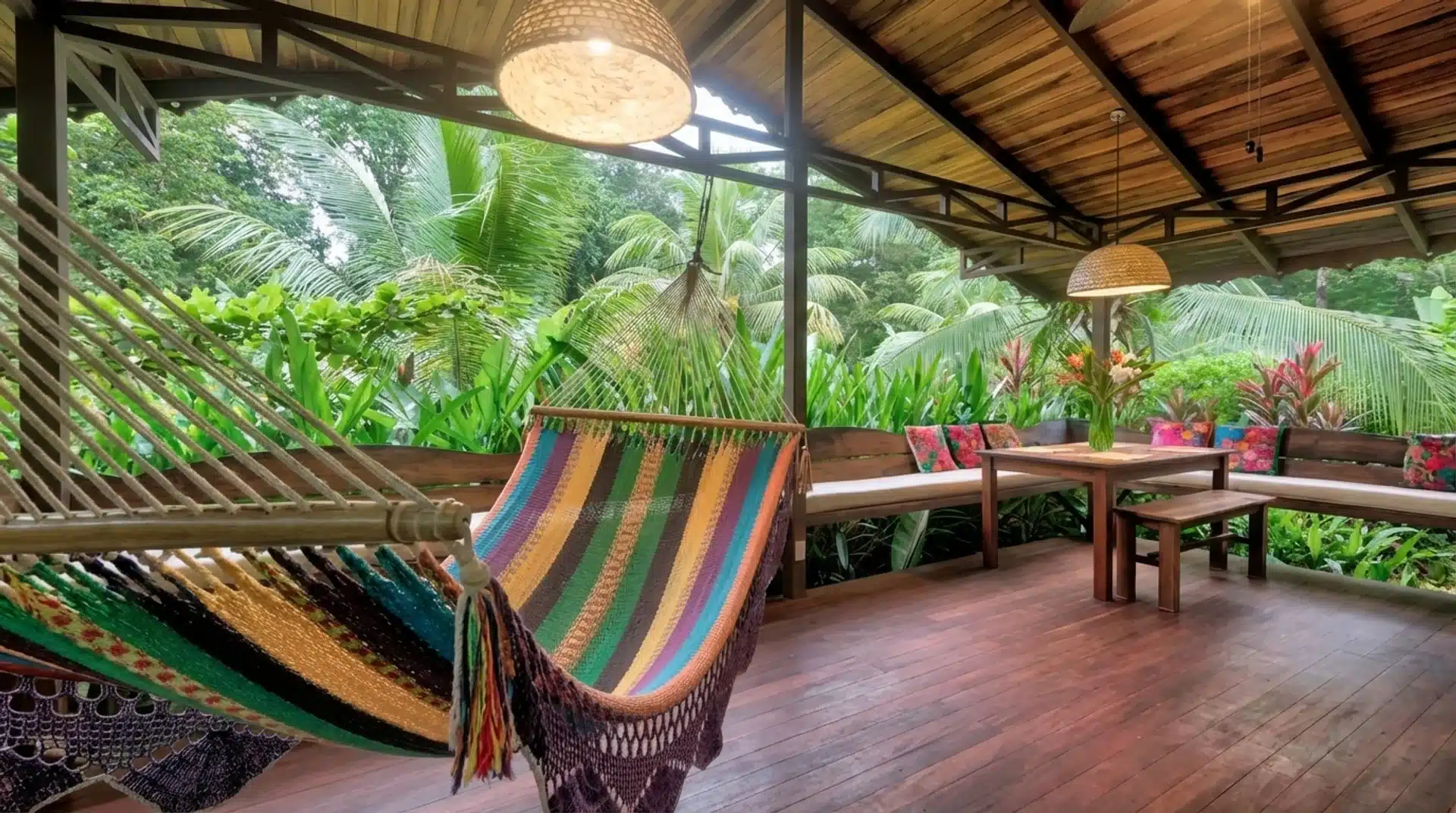
Le Cameleon is the standout boutique hotel in the area, located right on Playa Cocles with a sleek, contemporary design and a spa. Shawandha Lodge near Playa Chiquita is an eco-luxury option built with teak and local hardwoods, set deep in the jungle. Umami Hotel is a newer addition combining modern design with Caribbean character, earning strong reviews from guests.
Mid-Range ($60 to $150 per night)
Hotel Banana Azul sits on Playa Negra and offers a mix of rooms and suites with one of the best breakfast spreads on the coast. Namuwoki Lodge near Playa Cocles has standalone bungalows set in lush gardens. Cashew Hill Lodge overlooks the jungle and offers private cabins with ocean views at a fair price point.
Budget (Under $60 per night)
Rocking J’s is the legendary backpacker hub of Puerto Viejo, with hammocks, tent sites, mosaic art, and a vibrant social scene. Hostel Pagalu is a cleaner, quieter alternative with dorms and private rooms in town. For a family-friendly budget option, several locally owned cabinas on the Playa Cocles road offer simple but comfortable rooms for $40 to $50 per night.
For our full hotel breakdown by budget and traveler type, read: Where to Stay in Puerto Viejo: The Ultimate Hotel Guide (2026).
Caribbean vs Pacific: Which Costa Rica Coast Should You Visit?
Quick answer: The Pacific side (Manuel Antonio, Guanacaste, Nicoya) offers more developed tourism infrastructure, predictable dry season weather, and a wider range of luxury resorts. The Caribbean side (Puerto Viejo, Cahuita) offers a completely different culture, better snorkeling and coral reefs, a more laid-back vibe, and lower prices. Most travelers who have time should visit both. If you can only pick one, the Pacific side suits first-time visitors and families; the Caribbean suits repeat visitors, culture seekers, and budget travelers.
Factor
Caribbean (Puerto Viejo)
Pacific (Manuel Antonio, etc.)
Culture
Afro-Caribbean, reggae, Bribri indigenous
Latin, surf culture, resort-oriented
Beaches
White sand, coral reef, turquoise water
Varied (some white, some rocky, great sunsets)
Snorkeling
Excellent (living coral reef)
Limited (rocky reefs, less visibility)
Weather
Driest: Sep/Oct + Feb to Apr
Driest: Dec to Apr
Crowds
Low to moderate year-round
Moderate to high in dry season
Prices
20 to 30% lower than Pacific
Higher, especially high season
Getting There
4.5 hrs from SJO, no flights
2 to 3 hrs from SJO, domestic flights available
The honest answer: both coasts deliver incredible experiences, but they feel like completely different countries. The Caribbean is more raw, more culturally distinct, and more affordable. The Pacific is more polished, more accessible, and more popular for a reason. We plan trips to both sides regularly. A dedicated comparison guide is coming: Caribbean vs Pacific Costa Rica: Which Side Should You Visit?
Is Puerto Viejo Safe for Travelers?
Quick answer: Puerto Viejo is generally safe for tourists. The main town is small, walkable, and tourism-oriented. Standard precautions apply: lock up bikes when unattended, do not leave valuables on the beach, avoid walking alone on unlit roads late at night, and keep an eye on your belongings in bars and restaurants. Petty theft (bikes, bags on the beach) is the most common issue, not violent crime.
The Caribbean coast has a slightly different reputation than the Pacific side, and some of it is outdated. Puerto Viejo is a relaxed, friendly town where the vast majority of visitors have a trouble-free experience. The local community depends on tourism and treats visitors well.
That said, it is more laid-back and less “resort infrastructure” than Manuel Antonio or Tamarindo. There are fewer security cameras, fewer police patrols, and more unlit stretches of road. The practical advice: do not leave valuables in an unlocked car, do not flash expensive electronics on the beach, and use a bike lock. If you follow the same common-sense precautions you would in any beach town, you will be fine.
For activities like snorkeling and surfing, use operators we recommend through Toorizta. All of our partners are licensed, insured, and personally vetted by us.
Puerto Viejo Travel Planning Checklist
Booking timeline. Puerto Viejo is less seasonal than the Pacific coast, so accommodations rarely sell out except during Easter week (Semana Santa) and the September/October dry window when word-of-mouth travelers arrive. For those periods, book 2 to 3 weeks ahead. Otherwise, 1 week is usually fine.
What to pack. Reef-safe sunscreen (required near the coral reef), a reusable water bottle, insect repellent, a lightweight rain jacket, water shoes for rocky beach entries, a bike lock if renting a bike, and cash in small bills. Many smaller restaurants and sodas in Puerto Viejo are cash-only.
Currency. US dollars are accepted at most hotels and tour operators but not everywhere. ATMs in town dispense colones. Some businesses along the Cocles-Manzanillo road are cash-only. Carry colones for small purchases, sodas, and bike rentals.
Connectivity. WiFi in hotels and cafes is generally reliable in town and along the main road. Cell coverage is good in Puerto Viejo and drops off past Punta Uva. If you need mobile data for navigation, purchase an eSIM or local SIM at the San Jose airport before heading to the coast.
Health. Mosquitoes are more active on the Caribbean coast than the Pacific side, especially near wetlands and during the wetter months. Use repellent consistently. Tap water in Puerto Viejo is safe to drink in most accommodations, though some travelers prefer bottled water. The nearest hospital is in Limon (1 hour). Pharmacies in town stock basics.
Frequently Asked Questions
Is Puerto Viejo worth visiting?
Yes, especially if you want to experience a side of Costa Rica that feels nothing like the typical Pacific coast tourist trail. The Afro-Caribbean culture, the coral reef snorkeling, the food, and the laid-back pace make it one of the most distinctive destinations in the country. It is particularly rewarding for repeat visitors who have already done Arenal and Manuel Antonio.
Is Puerto Viejo good for families?
Absolutely. Punta Uva’s calm, shallow water is ideal for young children. Cahuita National Park is an easy, flat trail where kids spot monkeys within minutes. The Jaguar Rescue Center is a hit with all ages. The main things to be aware of: some roads are unpaved, bikes are the primary transport, and the nightlife scene in town skews younger and livelier than family-oriented areas like Manuel Antonio.
Can I combine Puerto Viejo with other destinations?
Yes. The most popular multi-destination itineraries including Puerto Viejo are: Arenal + Puerto Viejo (7 to 10 days), Arenal + Manuel Antonio + Puerto Viejo (10 to 14 days), and Puerto Viejo + Bocas del Toro, Panama (a popular side trip, just 3 to 4 hours by shuttle and water taxi from the border at Sixaola). We plan all three combinations regularly.
Do I need a car in Puerto Viejo?
Not necessarily. Many travelers get around entirely by bicycle. The town is small, the coastal road to Manzanillo is flat, and bikes are cheap to rent ($8 to $12/day). A car is useful if you plan to visit Cahuita frequently (30 minutes north) or want maximum flexibility, but taxis and tour shuttles cover most routes. If you rent a car, note that the road between Puerto Viejo and Manzanillo is paved but narrow with no streetlights at night.
What food is unique to the Caribbean coast?
The Caribbean coast has its own cuisine, distinct from the rest of Costa Rica. Must-try dishes include: rice and beans cooked in coconut milk (different from the Pacific side “gallo pinto”), rondon (a rich coconut seafood stew with root vegetables), patacones (fried plantain), Caribbean jerk chicken, and fresh ceviche. Bread pudding with coconut is a local dessert staple. The best places are small sodas and home kitchens, not tourist restaurants.
Plan Your Puerto Viejo Trip with Toorizta
Ready to Explore Costa Rica’s Caribbean Side?
Tell us your dates, group size, and interests. We will build a custom itinerary that includes the best beaches, activities, and transport. We handle the logistics so you can focus on the Caribbean rhythm. No commitment, no fees for planning.
Talk to Dallas & Marta on WhatsApp
Dallas & Marta
Pura Vida
Toorizta is how modern travelers plan, book and share Costa Rica trips. Open the app to build your own.
Open the Toorizta app